This is the first post on my new blog. I’m just getting this new blog going. I am in Berlin for a hopefully awesome class trip. So stay tuned for more.
Studying abroad is an important thing that every college student should try at least once. Studying away helps you gain life skills that you can not experience away from the normal classroom setting. It helps you grow as an individual, as well as a student. The time you spend overseas teaches you so much more than what it on your syllabi. When the world becomes your classroom you get a global perspective that you would not normally get. Students might not want to study away because it is expensive or they don’t feel comfortable meeting new people or going to a new place. To study away, you do not need to go out of the country. You can get some of the same insight by just studying in a new environment. (Peveto). Studying away has an important impact on your personal and academic goals.
Unlike a vacation, you gain more life skills with every encounter that you have. Just by going to the store or asking for directions, you gain skills when your in a forein country. For example, you have to overcome language boundaries. I got lost enough times in Germany to learn who to ask and who to not ask for directions. I learned that is probably better to ask directions to someone working in a shop, then just someone on the street. This is because you know that they are more likely to know English. Also, you might not want to interrupt someone as they are just passing by, because they could be in a rush.
One of my favorite moments that I had while in Germany was when I was at the grocery store by myself. The store was behind the hotel, but I did not know how to get back to the street to where the hotel was at. So I pulled out the paper and asked someone that worked there. They did not know, so they asked their supervisor. One woman that was checking out was like “I am going there now, I live on that street, so I will walk you back.” I thought that was the nicest thing that happened to me while I was there. Up to that point the German’s had not been very nice to me at all, ignoring me, when I knew they could hear me and understood english, and things like that. I was on my guard the whole time she helped me get to the street, because I am a female, in a forein country by myself, with someone I did not know. It turned out ok and she pointed me in the direction of the hotel.
It can help your academic goals in many ways as well. If learning another language is one of your goals, there is no better way then going to a forein country. You can learn so many different words just by listening on the street or in the subway. You can learn so many things just by the people you are around. You would be surprised by how many words you pick up in a forein country, just by being around different people.
Lastly, it can help your personal goals in many ways as well. For instance, I was nervous that I would not get along very well with the people on the trip with me. I can make friends with everybody, but for some reason these people seemed different because they were not people that I would typically hang around at school. Coming on this trip together, we bonded a lot, being around people non stop for seventeen days might do that to you. I feel like once school starts we will go our separate ways, into the groups we were once apart of and might even act like we never met. That’s how it always is, isn’t it? In my opinion, it does not matter if I never see them again, because the memories that we made will be with us for a lifetime. How many people can say that they got to have this amazing experience? Not many I know. With that being said, take in every moment of an opportunity like this. Even the little moments that you thought might not be important. You will remember every little moment that you encounter.
In conclusion, studying away is an amazing experience. It helps you with your academic and personal goals. When the world becomes your classroom you get a global perspective that you would not normally get. It helps you get insight that you will not get in a normal classroom setting. You will grow as an individual as well as a student. If you get the chance to do it, take it and take in every moment of the trip. Make the most of it, even the little things. It is a chance of a lifetime.
Taken by Alyssa D’Emanuele, BerlinTaken by Grant Morgan, BerlinTaken by Kiersten Barkhimer, Berlin
In my opinion Socially East and West Germany was not successful in reunifying their cities. But, constitutionally they were successful.
Putting up the gate, to divide the East and West was a horrible decision. It divided friends, family, u-bann lines, lakes and rivers. In the East, you could not go to certain stations because they were too close to the wall. Those became ghost stations. Wanting the wall down was probable the one thing the East and the West could agree on. Could you imagine not being able to see your family just because they lived on a different side of town?
Ghost Station, Berlin
There were many factors leading up to the wall coming down 1990. One of those reasons was President Ronald Reagan put pressure on the Germans in his famous Berlin Wall speech in 1987. He exclaimed “Gorbatov Tear Down that Wall.” He also amped-up the Cold War rederick, by calling the Soviet Union an evil empire, because Reagan was fighting communism; which opened up doors to talk about the wall with the Soviet leader. The protests in 1981, was another thing that put pressure on them to open up the wall. Austria and Hungry had opened up their walls in August 1989. Lastly, on November 9, 1990 a reporter misreads from his script and states “the borders are open you may leave.” People from the East and West come running and break the wall down. On October 3, 1990, eleven months after the wall comes down there was reunification again.
Part of the Berlin Wall, Taken by Alyssa D’Emanule
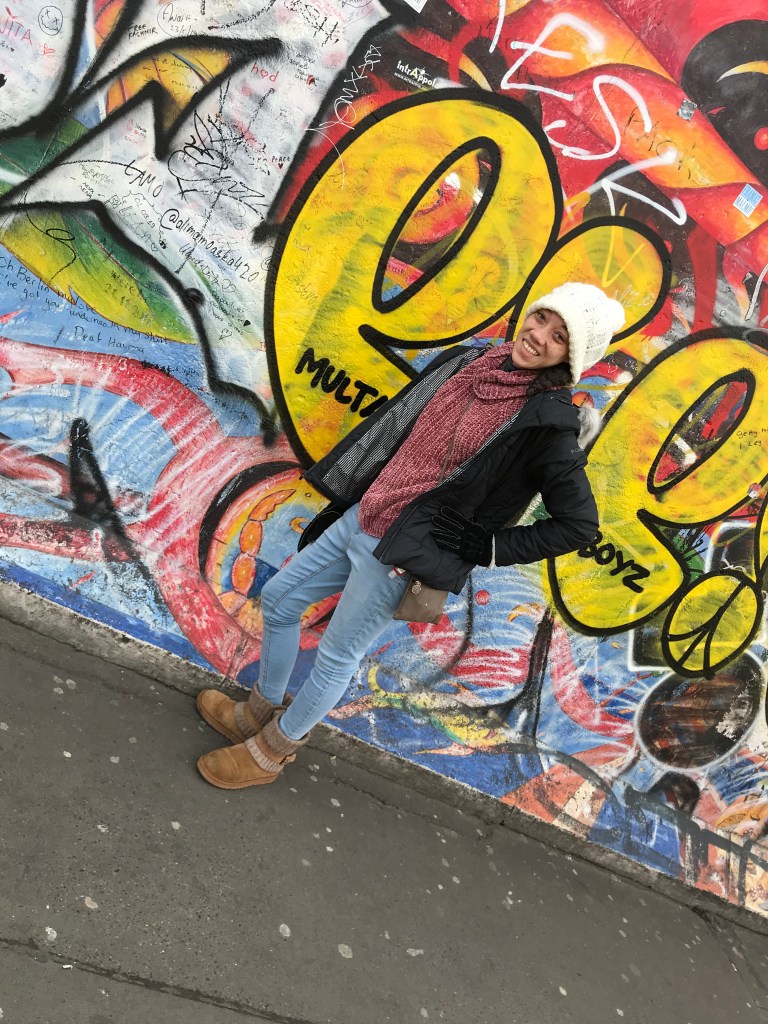
They brought in artists to paint these murals on their once dividing wall, in order to reclaim the wall for their democracy. Many of the pictures stand for international solidarity, peace, and brotherhood.
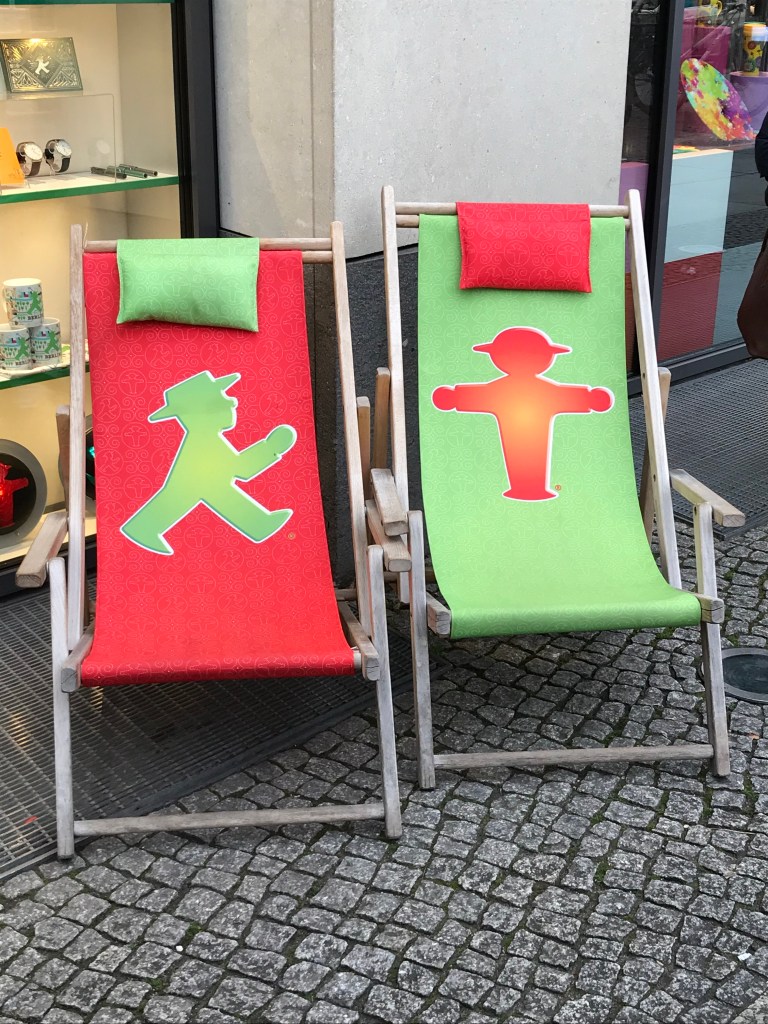
I thought it was interesting how they thought that “for the West Germans nothing had changed after the wall came down, but for the East Germans everything had changed.” The West Germans came in and tried to change everything about the East Germans. The West tried to change the East Germans street signs, they tried to take down their monument of Lenin. Due to the West coming in thinking they were the “boss” and changing everything, the East decided to fight back. Funny enough the argument started over their street lights, because the East thought their street lights were friendly, and the West German’s lights looked mean. The East and the West did not agree on much, because they were raised very differently, due to the wall. Not so long ago there was a poll, and 66% of East German’s felt like they were being treated as second class citizens.
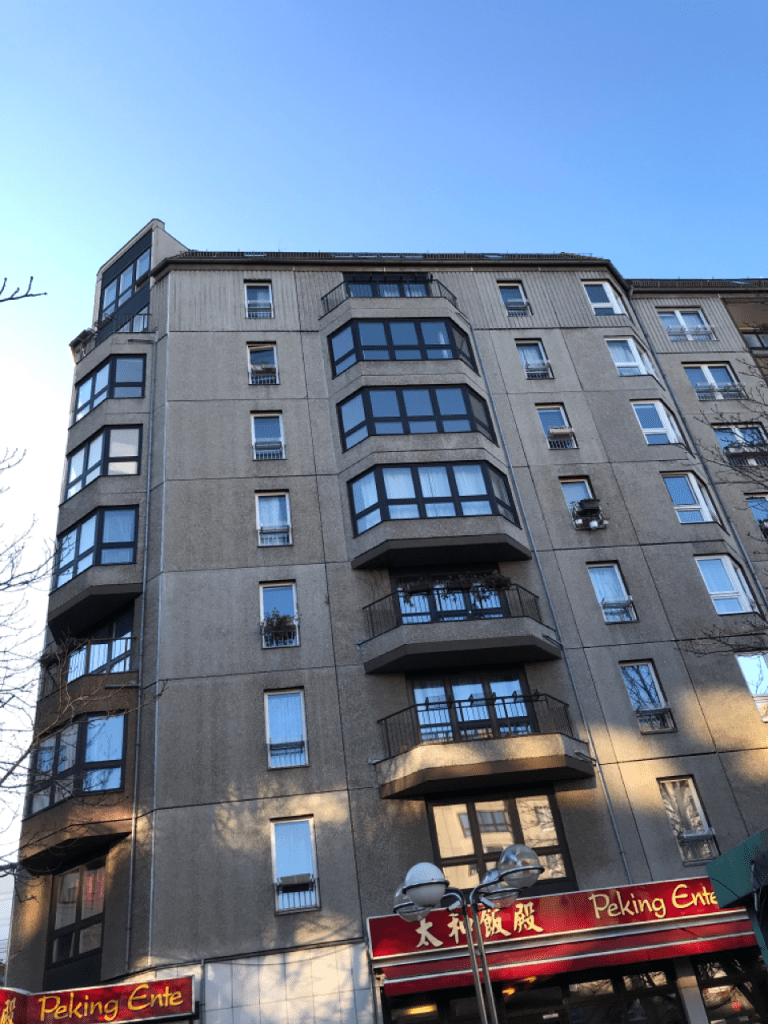
The German ascetic does not look that different to me today, but in the past East and West Germany have different ascetics. The German ascetic is full of high rise buildings and art that expressed the time period it was designed. East Germany in particular reminds me a lot of New York City, because of the high rise buildings and busy traffic.
The look in the West Berlin is more modern then East Berlin. It is the main attraction to tourists, because of all the big hotels and stores. It is also more flashy, then East Berlin. East Berlin has more older, historic buildings. Most of the historic buildings and memorials that we have seen are in East Berlin. All of East Berlin is still under construction, because the West had more funds to fix up the buildings, due to the United States funding the Western part of Berlin.
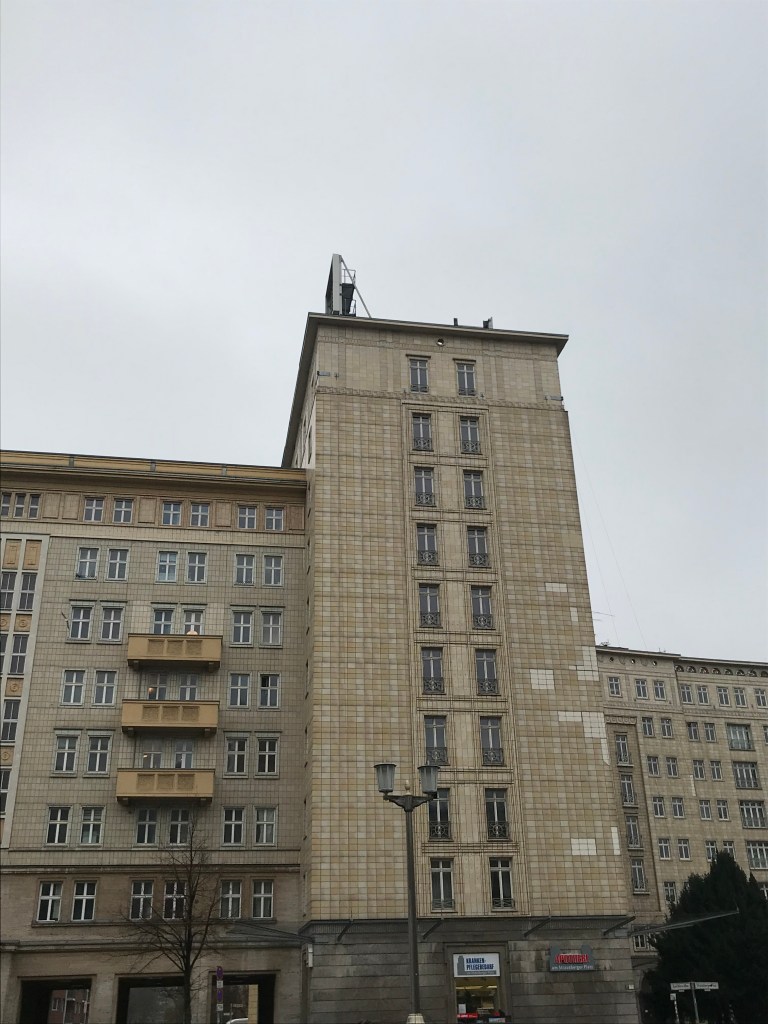
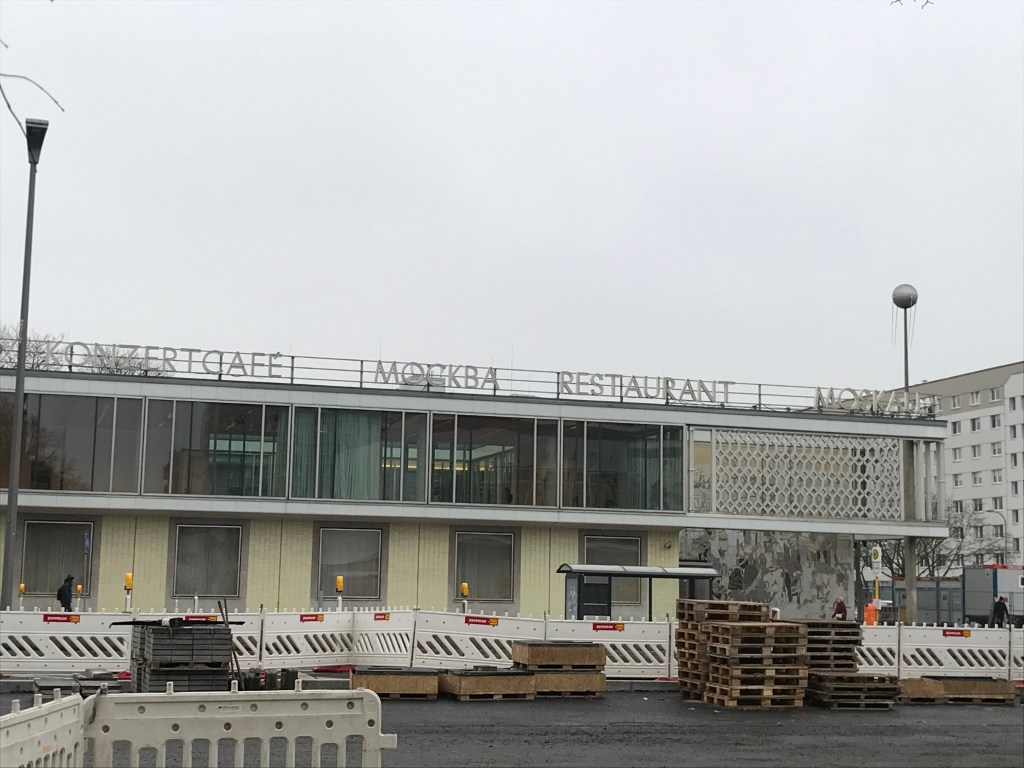
. They refashioned the city with new architecture and art. The buildings that were built in the 1950s were older looking, because it was right after the war. Many of the buildings during the war were destroyed and had to either be rebuilt or torn down. The later that we got into history started to become more modern and Americanized. For Example the Palace of the Republic was the place parliament met from 1973-1976. Then it was turned into “the party spot” for prestigious East Germans. It was located in the same location as the apartment complex on Karl-Marx-Alee. This was the place that everyone wanted to live in East Berlin, but not everyone could afford it. Also it was near the Café Moskow. This was the spot if you had the money to afford eating there.
How did the East German security system function? What were its key characteristics? How successful was it at keeping East German citizens in line?
The Soviet Union controlled the German prisoners in different ways. They controlled the prisoners mainly with physiological torture. They did not want to physically torture them, because that would not be in line with a democracy. They kind of “pretended to be a democracy.” They also tried to hide the Stasi prison by saying that it was a army camp. The Stasi would make prisoners confess to crimes they did not commit, like spying or terrorism, because since they were a democracy they could not arrest you without a sentence.
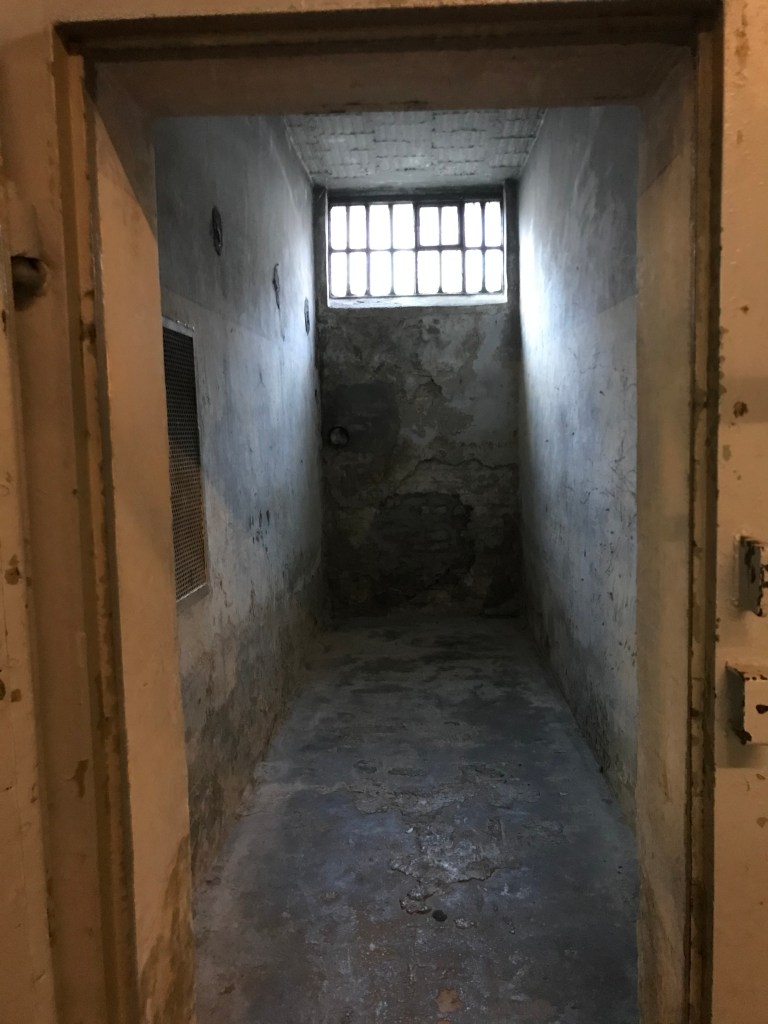
One way that the guards psychologically tortured their prisoners, was by putting them in solitary confinement. If you did not follow the rules, you got put in the submarine, which was like underground cells with basically no sunlight and just a bucket for a toilet. They were not allowed to talk to other prisoners. They were in isolation. The guards patrolled 24/7. They did not know who you were, as a prisoner, or what you did, they just knew that you could potentially be a dangerous prisoner. They had crazy rules in the prison too. Such as you were not allowed to exercise. You could not sit or lay on the floor during the day. There was a sleeping order, which meant that you had to sleep on your back with your hands on the bed sheets at night. If you needed to see the doctor, it was probably just a guard in disguise. In the interrogation room they might tell you a family member is really sick to get you to speak up and tell them what they wanted to hear. I liked one of the quotes that the tour guide said. Which was “Who sleeps in democracy, wakes up in dictatorship.”
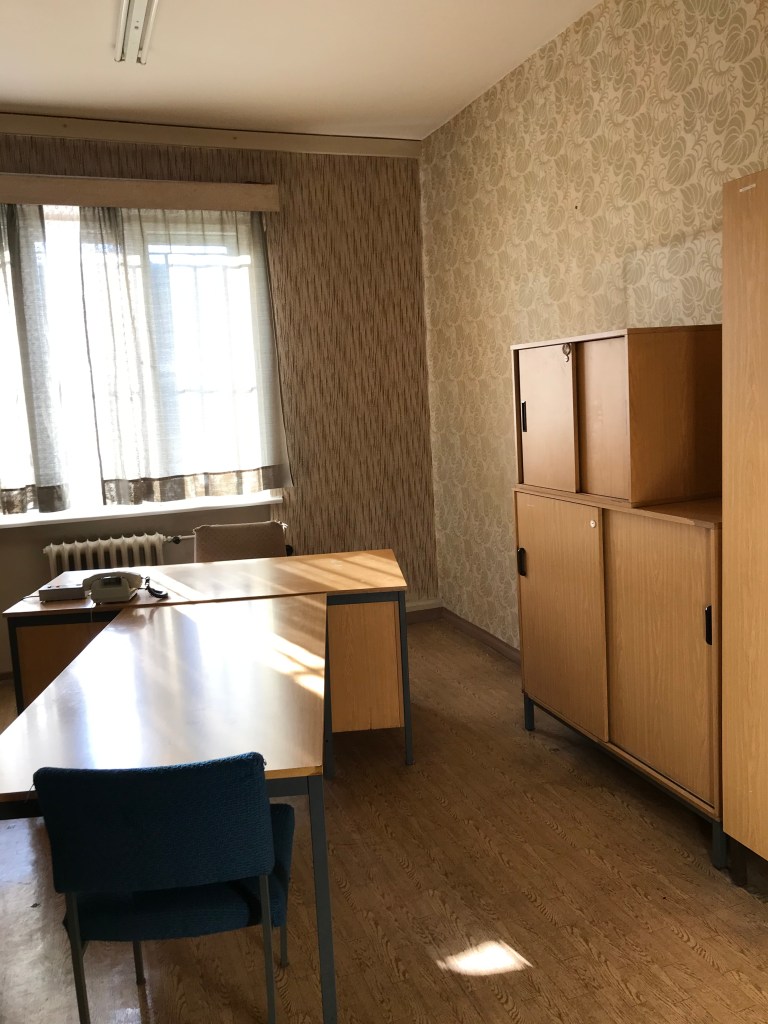
The Submarine, Berlin Stasi PrisonInterrogation room, Stasi Prison Berlin
Germany was described as a pariah country, because the world blamed them for the war. People hated Germany because they started World War 1 and in World War 2, they killed many people, and in some cases invaded other countries. Ten years after the war West Germany was back on its feet because they were helped by the United States. After the Germans won the world cup, they declared that “we are somebody again.” The soccer match is what put Germany back on the map. In the 1950s the younger generation started to get rebellious and they rejected their parent’s world. They started to act more Americanized. The parents were not alright with this and rejected the youth’s culture.
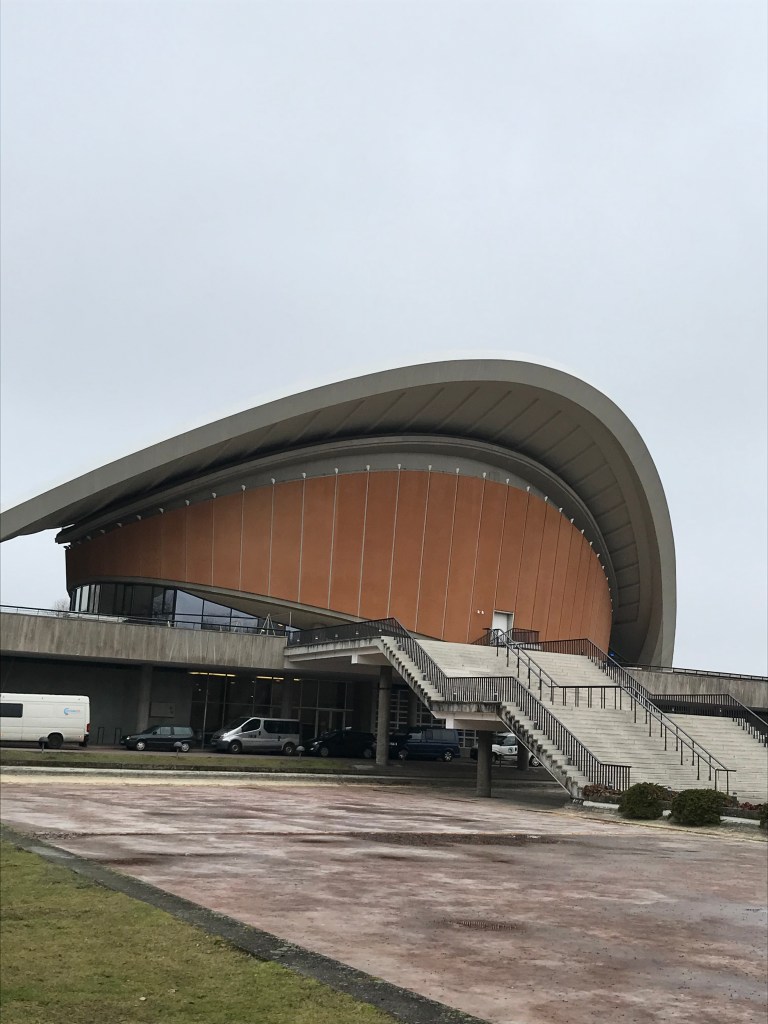
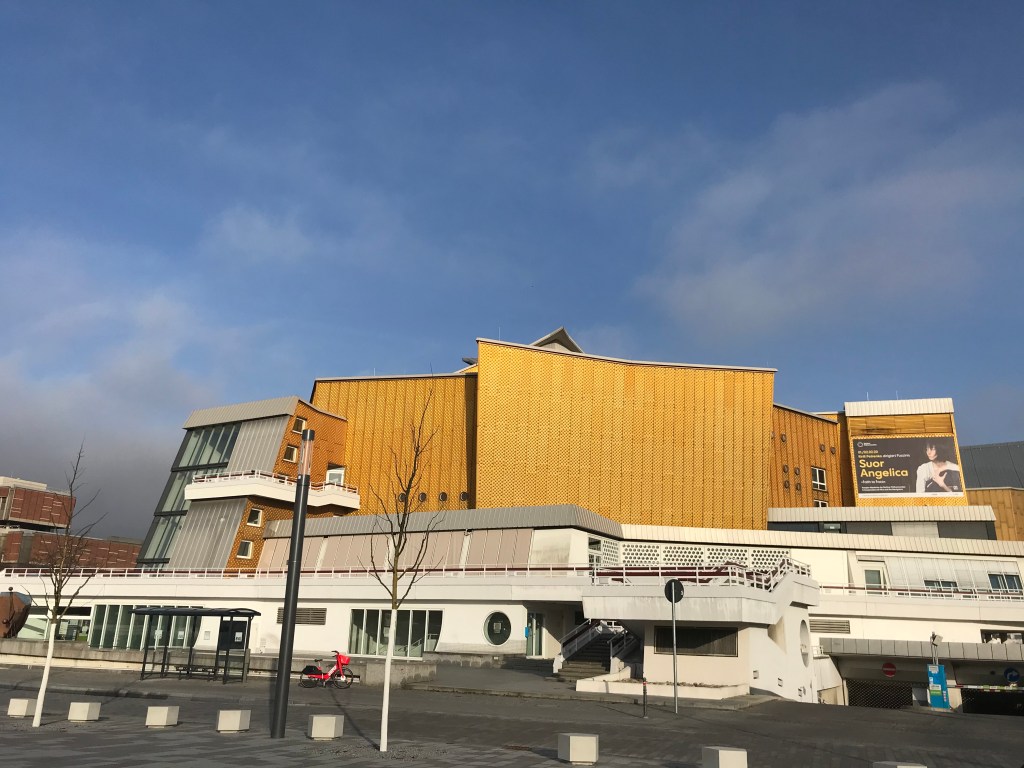
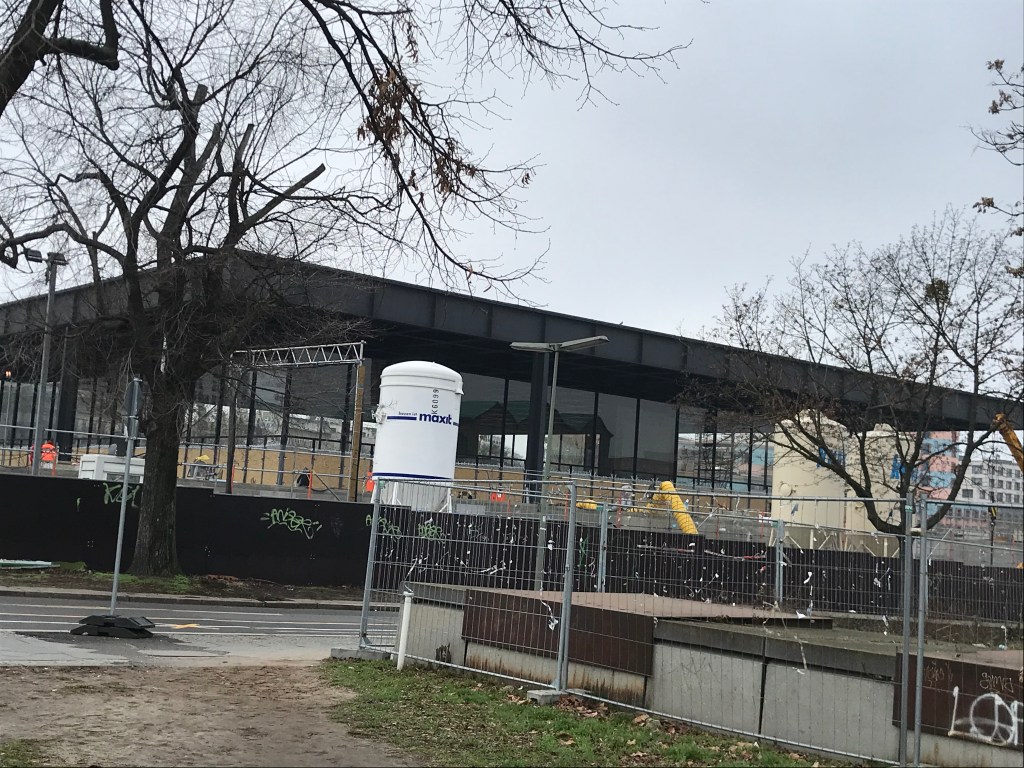
The look in the Western part of Berlin is definitely more modern. The city looks for like New York City. It looks like it would be the main attraction to tourists, because of all the big hotels and stores. It is also more flashy, then East Berlin. Many of the buildings were more modern looking, simple or abstract looking. The Philharmonic, for example of was comprised of many shaped and sharp angles. The building did not have symmetry. It was unusual for the time for buildings to be more abstract. Another example is the House of the Culture of the World. It was built in 1950. This building was a sign that West Germany was becoming more normalized. It was more beyond the Bauhaus style, but it was not as full as some of the other buildings. Concrete was a more promenade ascetic style and more then just building materials. The National Gallery was built in 1960. It has darker glass, a flat roof, and columns that support the roof. It is very simple and has no decoration. By the 1970s people start to reject the ascetic of buildings like this. It just shows that what is pleasing to you, is different for each generation.
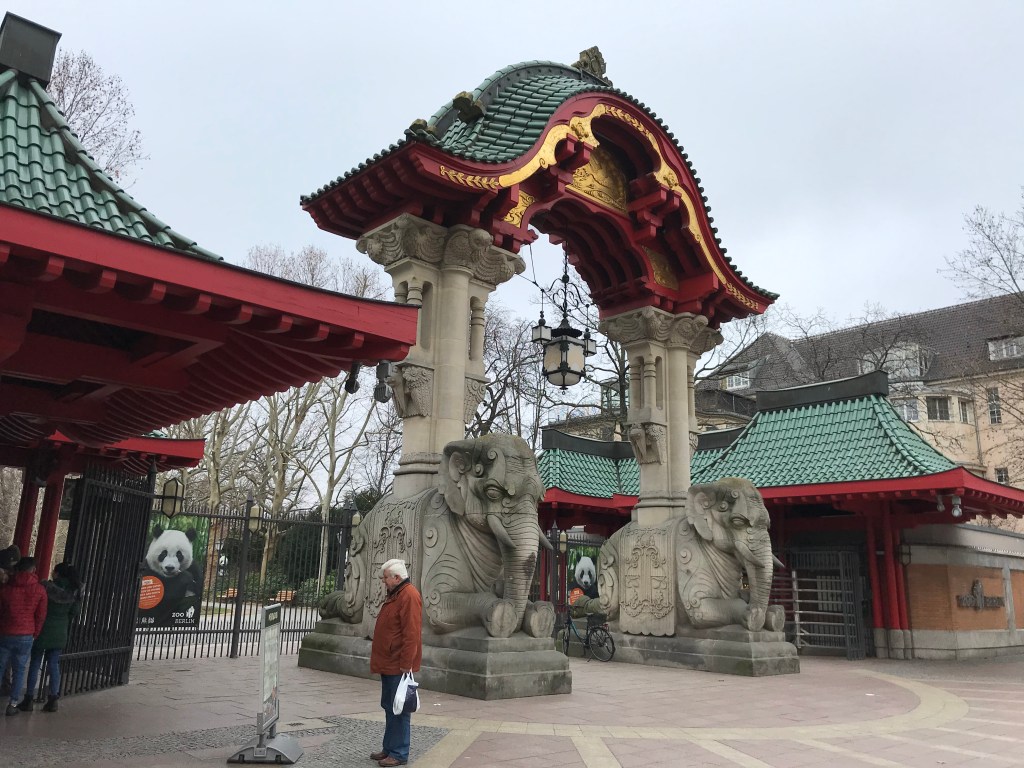
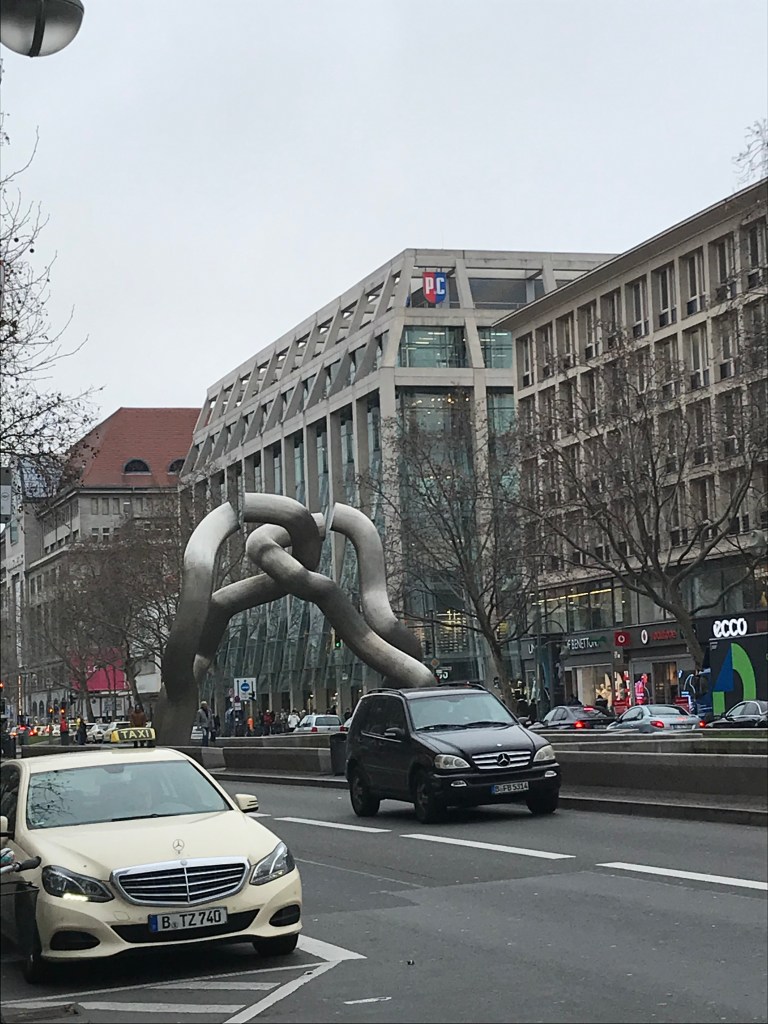
I liked how the Berlin Zoo looked. They incorporated many different cultural style looks. For example, the building itself looked like an Asian building, but the elephants looked like they were from India. The phenomena of popular entertainment was popular at the time the zoo was built. King Frederick donated the first animals. In 1904 they also displayed body parts from a genocide war. They would take indigenous people out to the desert and starve them, then put their heads on display. It was one of the first things that were restored after the war. Public art and sculptures became popular. Such as the broken chain. It was supposed to represent the separation of the East and the West. Little did they know that the wall was going to come down just a few years after. They decided to keep the sculpture to remind themselves of the hard time of being divided that they once went through.
House of the culture of the world, BerlinPhilharmonic, BerlinNational Gallery, BerlinBerlin Zoo, BerlinBroken Chain, Berlin
The Germans went about World War 2 like it did not happen and they did not talk about anything that had to do with the war. They decided that they were going to start off with a clean slate and start anew. World War 2 was a horrible tragedy especially on Germany’s part. They were targeting civilians, as well as Jews. Germany also got hit the hardest during the way, and they are still to this day renovating buildings from the war.
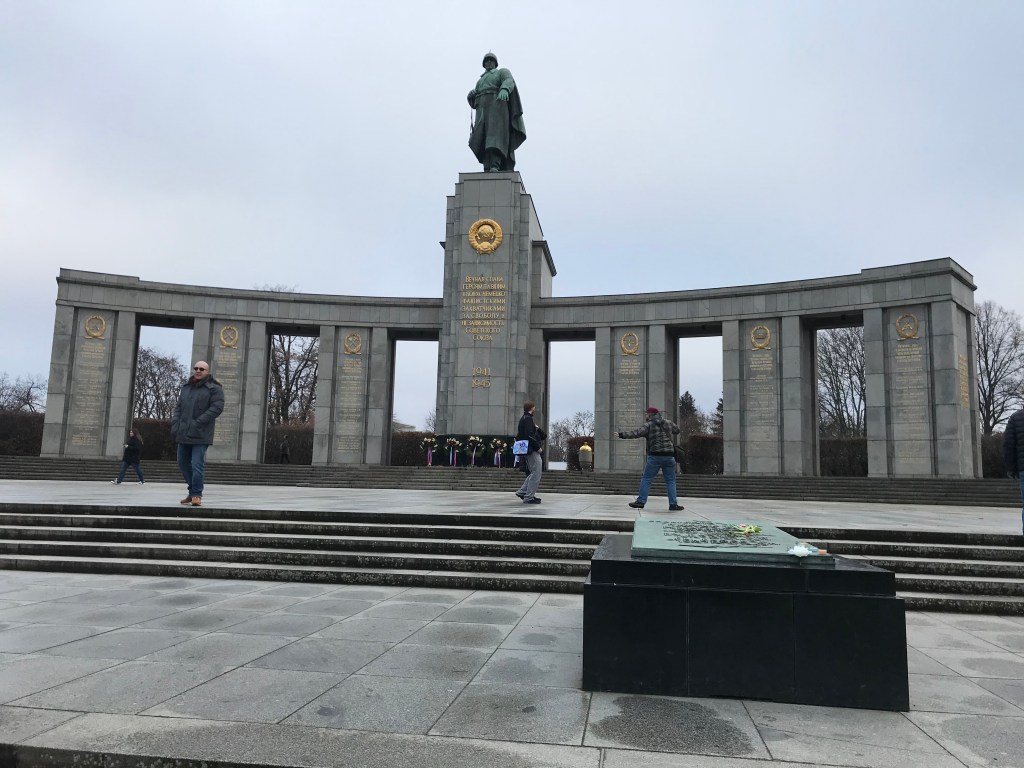
East and the West Germany shaped historical memory in multiple ways. For example the Soviets built a monument in 1945, right after the war, to celebrate the victory of the war. . The Soviets also produced a crazy amount of tanks, which was one of the reasons that the allies won the war. Ronald Reagan also gave an important speech around that time and he said; “Mr Gorbachev open the gate! Tear down the wall.” This was really important because they did not have any idea that the wall was going to come down after this speech. The Berlin wall coming down was a complete accident.
Soviet Monument, West Berlin
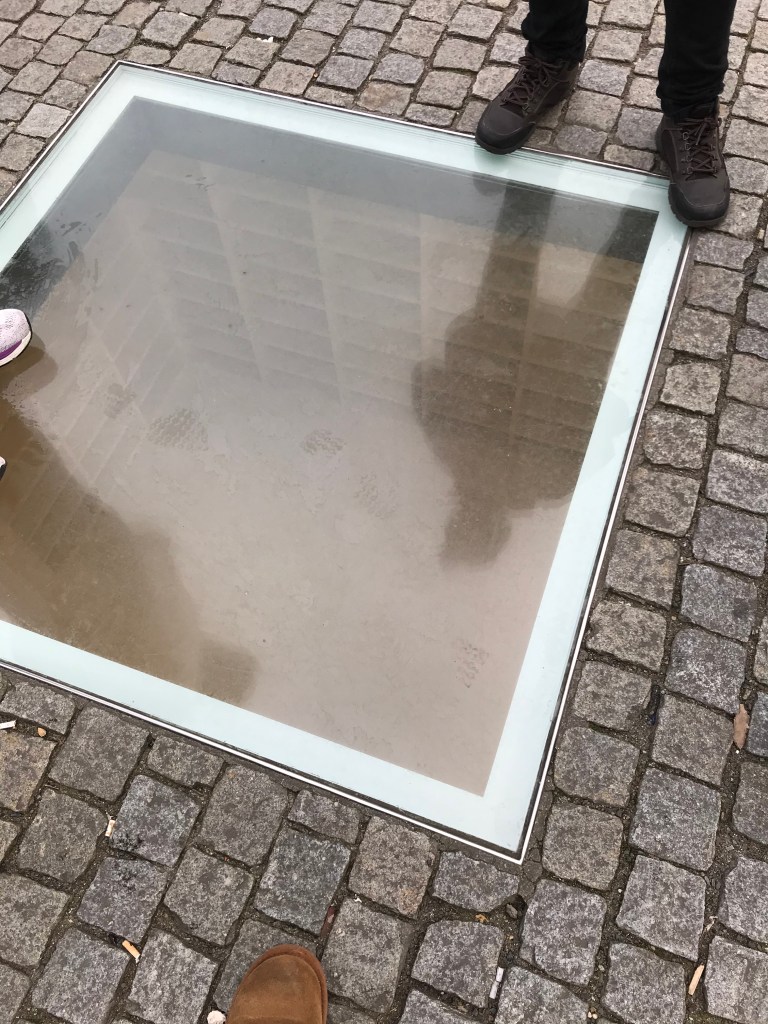
On the Eastern side there was a monument for the books that they burned during the war. In 1943 over 20,000 books were burned. I thought it was interesting how they said, “whenever books were burned, men would be burned as well,” because that was a completely true statement. So many innocent people died during this war, and the fact that they only targeted people that were not Hitler’s “superior race.”
Book Burning Monument, East Berlin
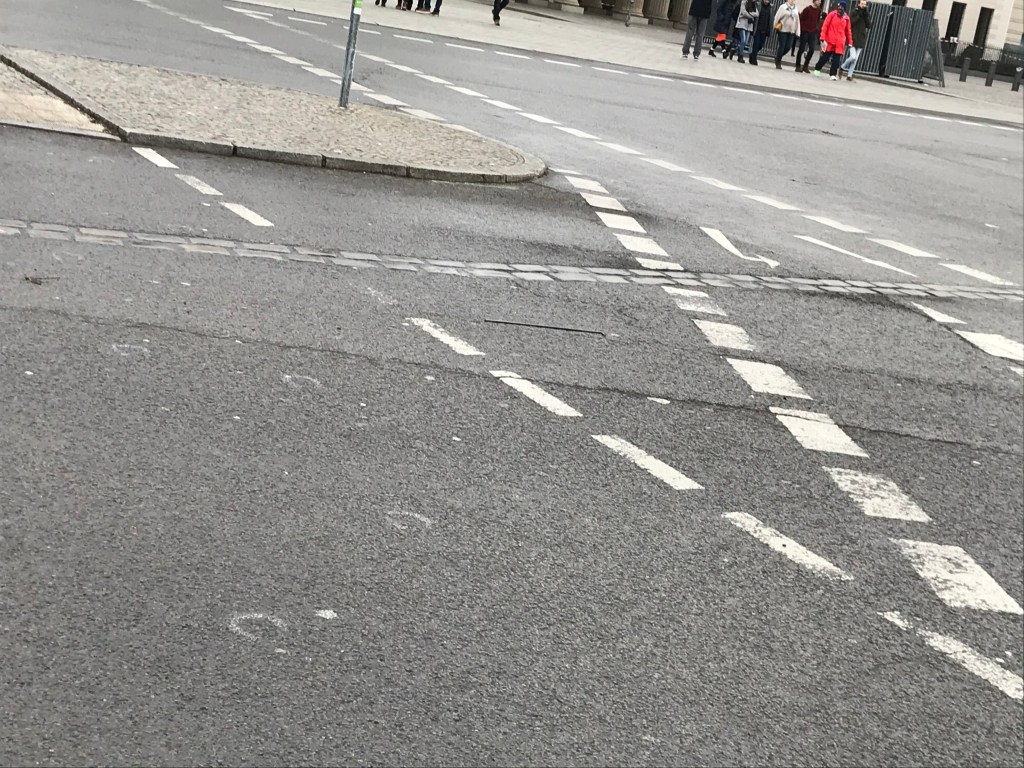
After the Berlin wall was put up in 1961, the people in East and West Berlin were in agreement that they wanted the wall down. By putting up the wall they were separating people from their families, if they lived in different parts. People also had to get new jobs if they lived in East Berlin, but worked in West Berlin. There were also many differences between the two. The key difference between East and West Germany is that East Germany had a communist system, while West Germany was democratic. The East German economy is a little behind West Germany. A reason for this is because most of the big corporations and headquarters are in Western Germany. Eastern Germany is also still going through a lot of construction from the war still.
Part of where the Berlin Wall used to be, East Berlin
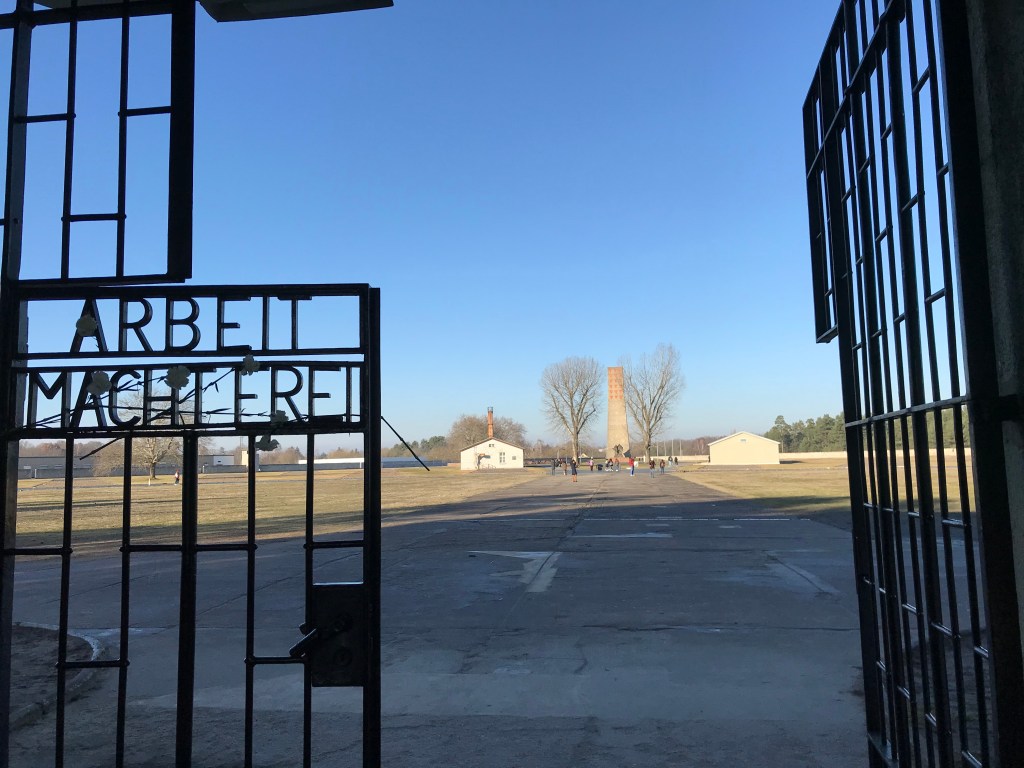
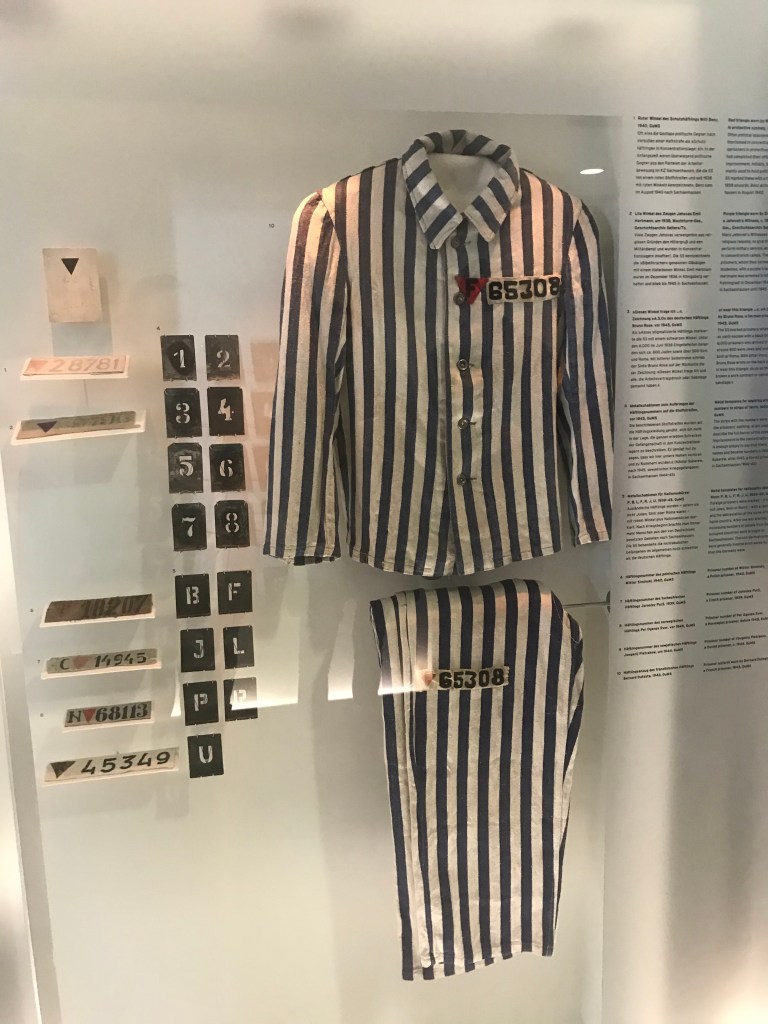
The most important that that I learned about Sachsenhausen was that nobody really knew that it was going on. Even in Germany some people thought that it was a myth. The main reasons that people were not aware of Sachsenhausen was because of the censorship and really strict state press. At the time there were not many modes of communication, that is one of the reasons that the United States did not enter into the war until later. When you entered there was a code of honor that you were not allowed to talk about the work camp. They would work 12 hour days, with no breaks. On average people would make it for eight weeks.
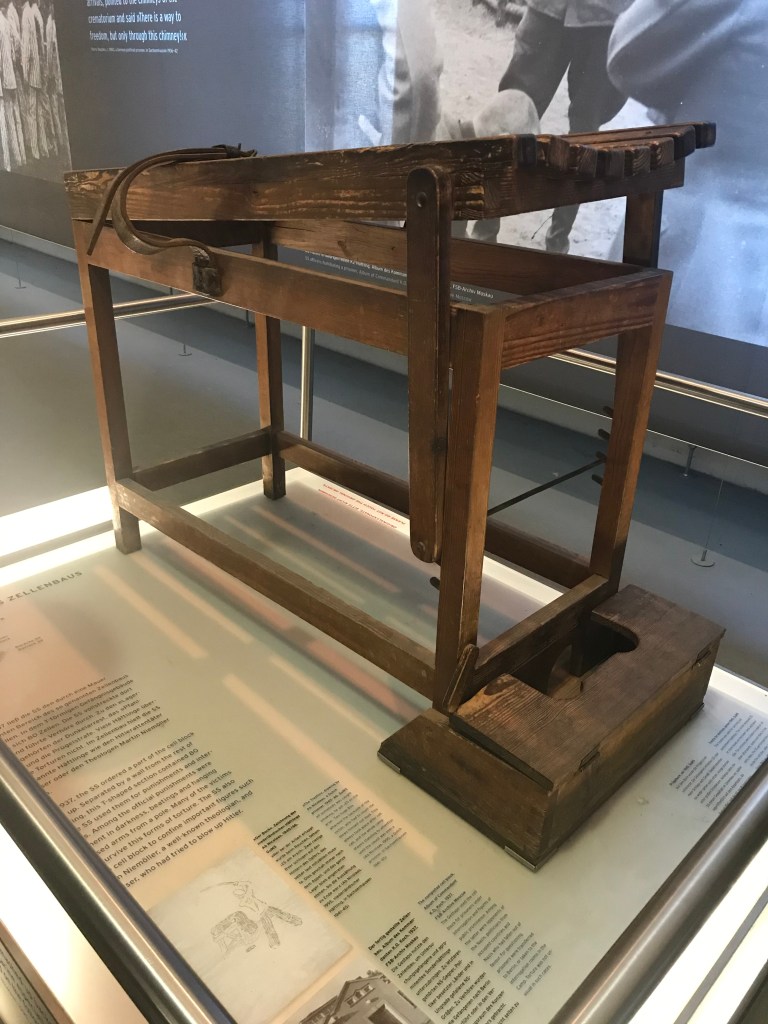
Working with the bricks were the stones, lugging around 60 lb rocks for 12 hours straight. Working in the kitchen was obviously the easiest job that you could get. All of the camps were run by the SS. Hitler’s leading class and “superior race” was people with blond hair and blue eyes. His second class was “humans,” such as Spaniards, French and Italians. His third class were “sub humans,” or Slavic people. His fourth class were Gypsies and his last class were the Jews. The higher up on the classes you were the more privileges you could get in the camp. The work camps were the better of the different concentration camps. People hoped for survival. 80% of people survived in the work camps, but 90% of people died in the death camps. So there was almost no chance of survival if you were sent to a death camp. Although when the world started to see what Hitler was doing to these people, their priority was defeating Germany and not liberating prisoners.
Entrance to Sachsenhausen, BerlinSachsenhausen uniforms, BerlinSachsenhausen torture device, BerlinSachsenhausen, Berlin
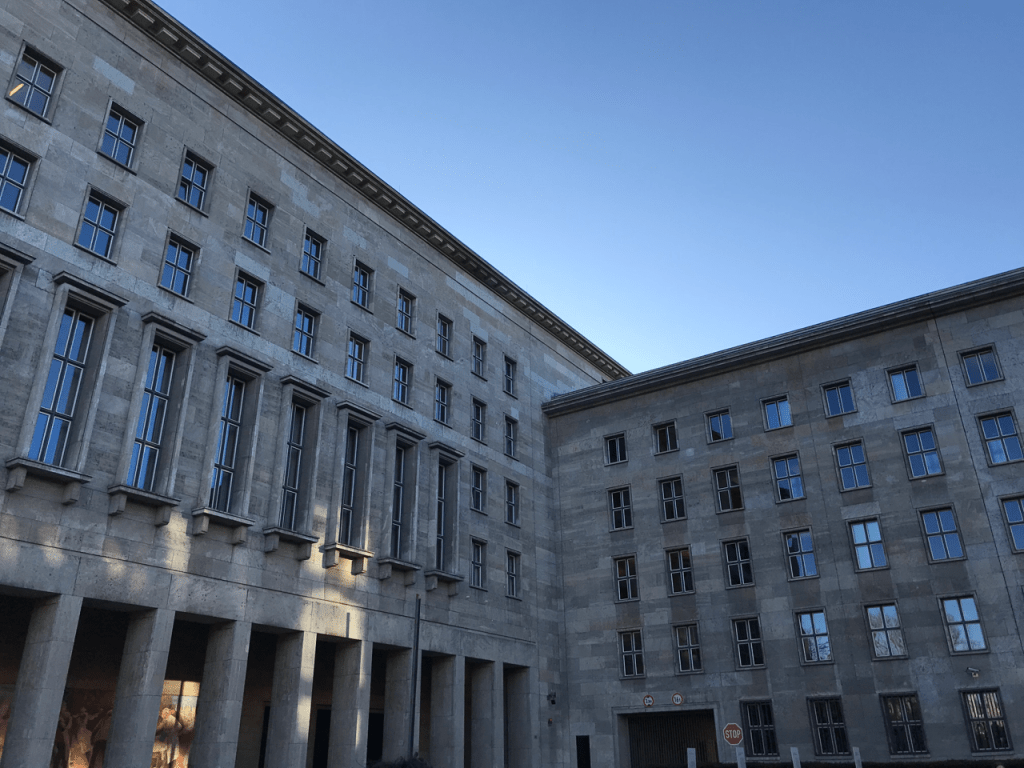
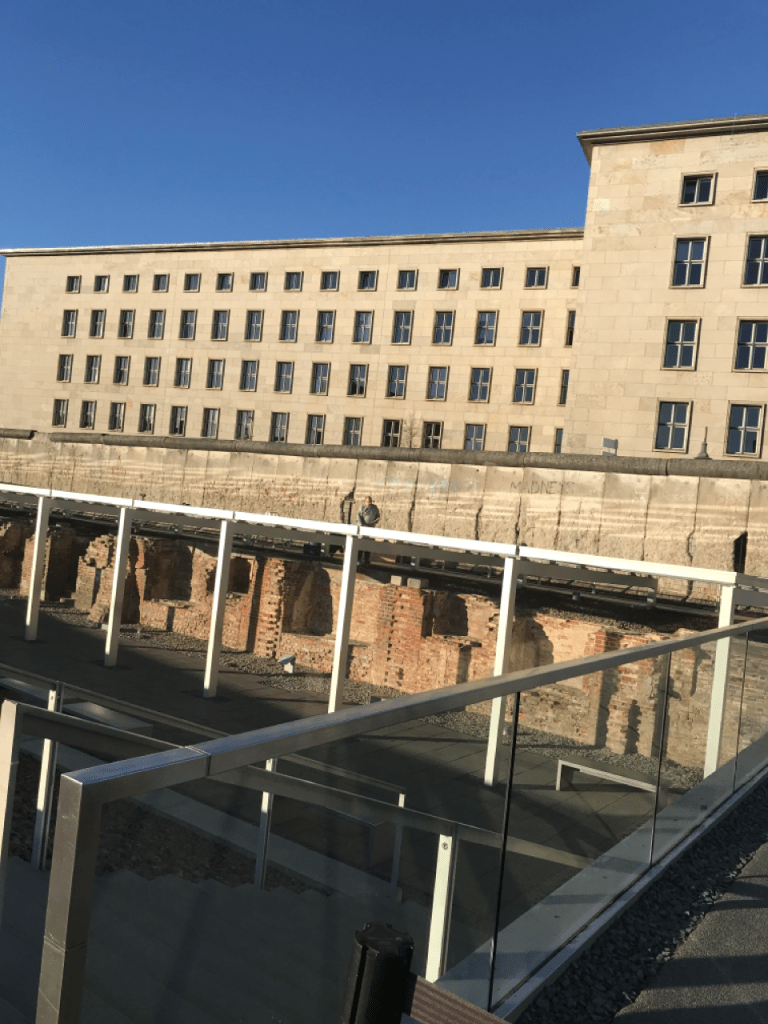
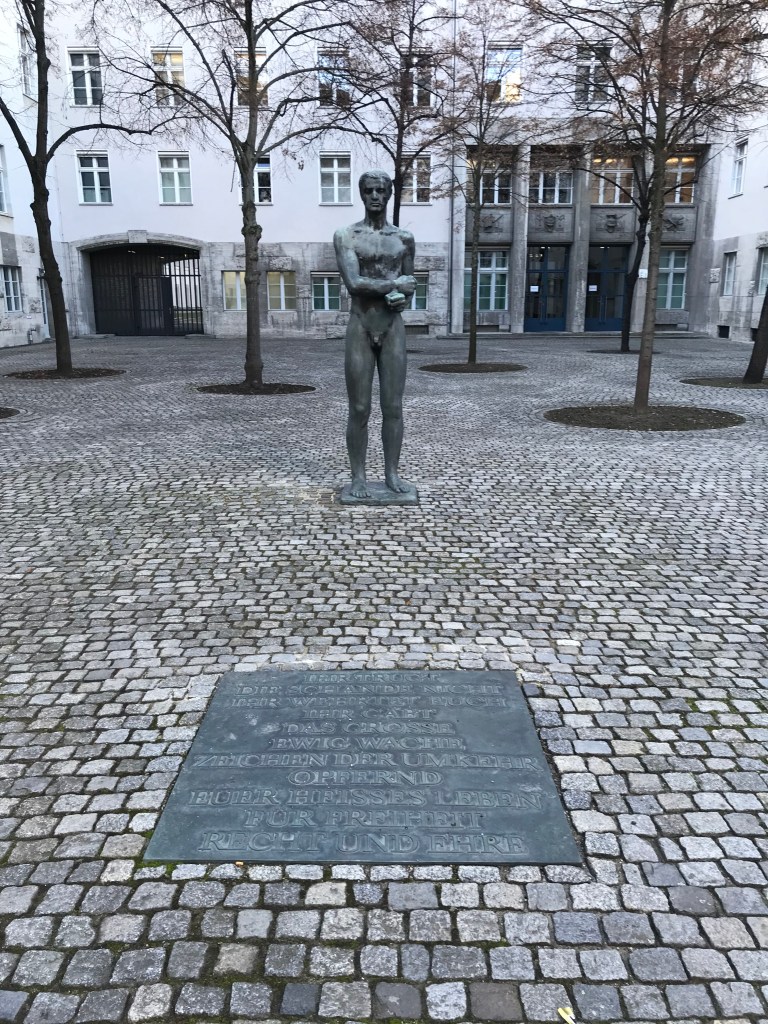
Some of the facets of the Third Reich that the Berliners chose to remember or commemorate were many of the buildings and memorials. When we walked through Nazi Berlin, I found it interesting how the Berliners chose to keep up some of the original Nazi buildings, and for some of the buildings they chose to tear it down and replace it with something totally new. They kept the original buildings of The German Resistance Memorial, The Air Force Ministry, and the Gestapo Headquarters. The only building that we saw that had been removed was Hitler’s Chancellery. The Chancellery is now modern and even has restaurants at the bottom of it. They did not want to keep the original building, because they did not want Neo Nazi’s coming there. Hitler intentionally made his buildings and their hallways long, so that people would feel small. In 1943 he started to build the Hitler Bunker, that he later committed suicide in. Today The Air Force Ministry became the council of users planning ministry. They kept the Gestapo Headquarters as it was, and added the Topography of Terror museum next to it. With The German Resistance Memorial, they also put inside the museum those who resisted Hitler’s terror. Hitler had many assassination attempts.
One of the guys that attempted to assassinate Hitler was Georg Elser on November 8 1939. He tried to kill Hitler with a bomb that he put in his pillar while he was giving a speech. Georg Elser was not well educated, which was weird because he made the complicated bomb by himself. He knew that Hitler was preparing for a war, because the indistries changed to only making weapons. Six million people were unemployed during Hitler’s rein and he could not understand why nobody was trying to stop Hitler. Even though Hitler took care of the “ordinary” people, had holiday programs for women and children, Elser knew that it was just a scheme. Everyone was overworked without overtime pay, had trade unions and the Nazi’s treated them so badly. Elser decided the best way to defeated his plan was to kill him. The plot to kill Hitler was unsuccessful because he unexpectedly left early. Many people died and over 60 people were wounded. Elser was arrested for trying to flee the country illegally after the attack. He was imprisoned for five years, but he got out for good behavior. After that he was tortured by the Nazi’s and he told them everything. On January 1945, he was taken to a concentration camp and Hitler ordered to kill him in April 1845. There were many more attempts on Hitler but none of them were successful.
What once was Hitler’s Chancellery, Berlin Air force Ministry, BerlinGestapo Headquarters, Berlin
One of the memorials that I thought was interesting, translated to say “you did not bear the shame you defended yourself you have the great eternally awake sign of repentance sacrificing your life for freedom right and honor.” Although I was curious to why they chose to have the statue of the man naked.
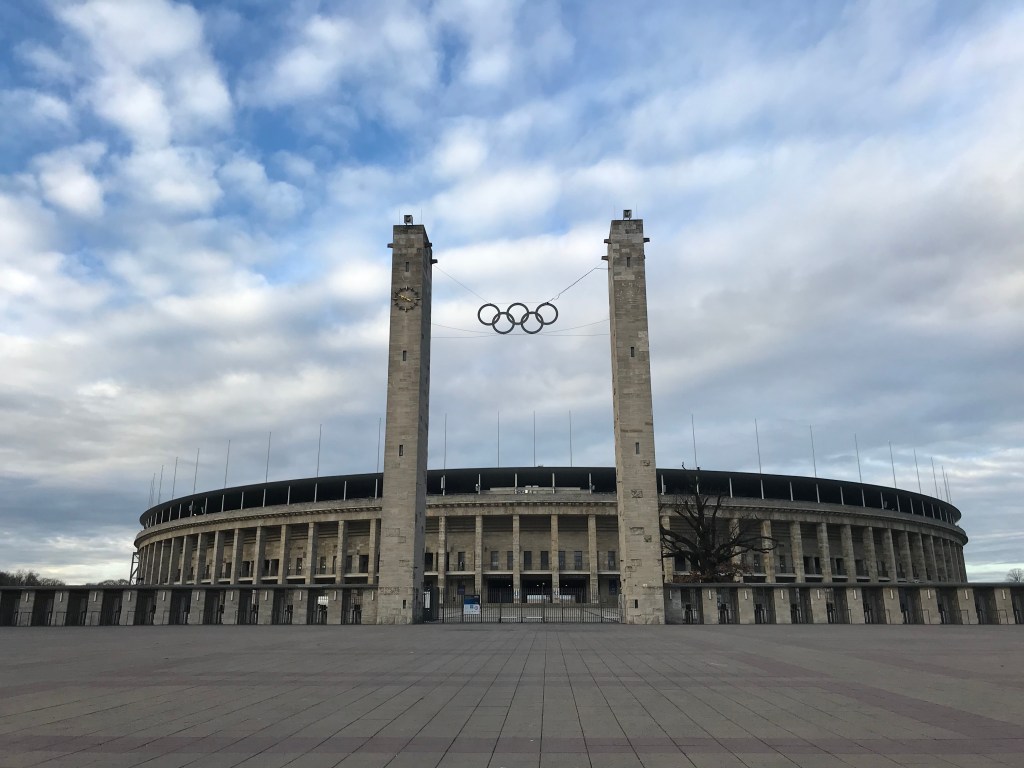
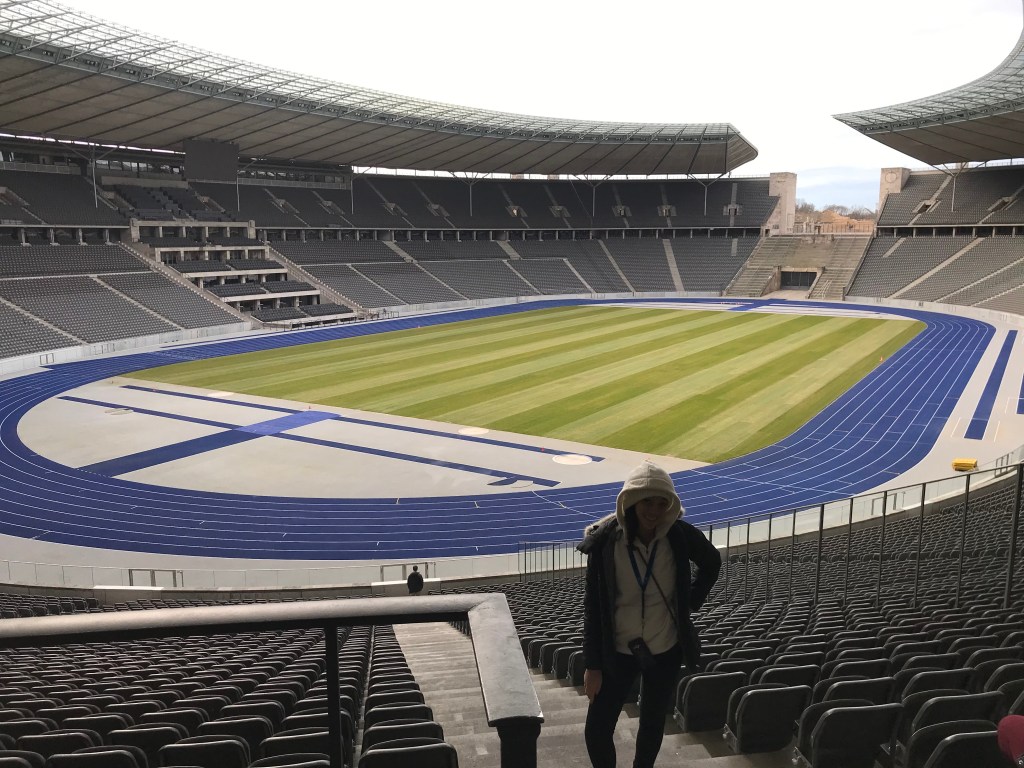
The Olympic stadium was my favorite thing that we have seen so far on this trip. I thought the inside of the stadium was modern looking, because of all the technology and all of the different sporting events. Although the outside of the building was not really modern looking, because of how the building is built. It is built with stones and has many pillars outside of the building. I like how the building does not look too modern. I like the look of the building, how it is, because it kinda shows how long the Olympics have been around. The Olympics don’t feel like they have been around since the 19 century to me.
Olympic Stadium, BerlinOlympic stadium Berlin, taken by Alyssa D’Emanuele
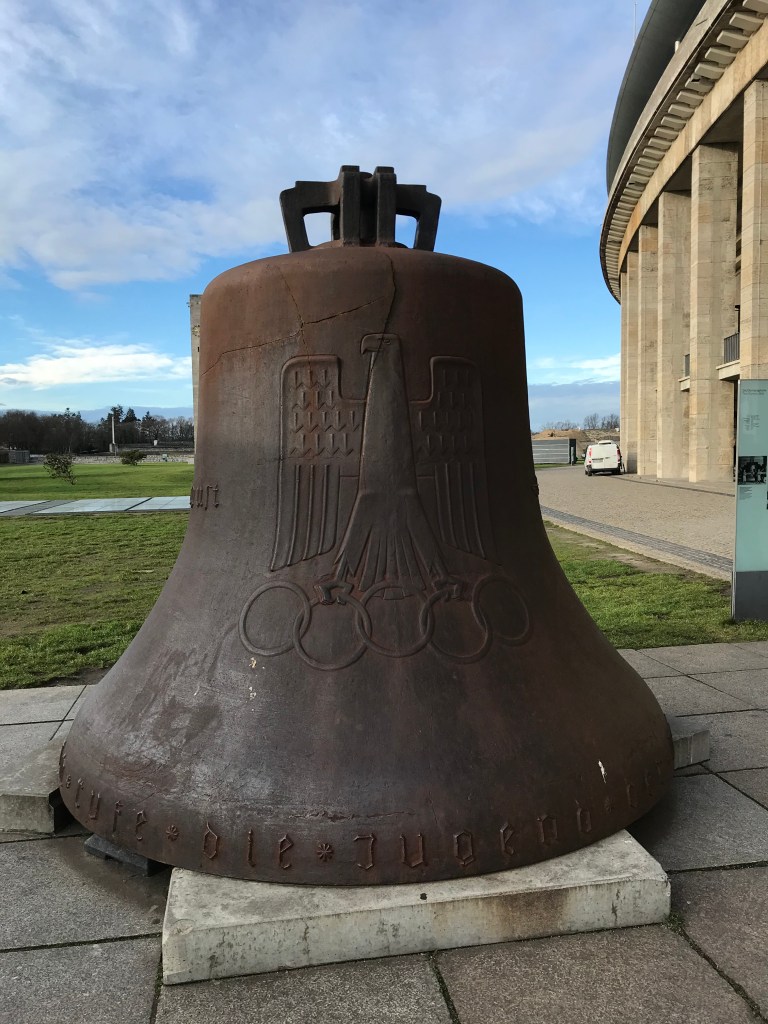
I think for the most part the Olympic stadium has emptied itself of it’s Nazi past. We did see a Swastika on the bell inside of the stadium. Although the symbol was very small and kinda covered up, so it was barely noticeable. I believe that the German’s have come to terms with their past. They know that what they did in the past with Hitler was very wrong. If you have a Nazi symbol or even hold up the Nazi salute, you will get arrested in Germany. My question is, do you think that it is necessary for the Germans to go to such extremes, as arresting people for doing similar things to remind people of the Nazi’s. Or do you think that it is a bad thing that America is not going to such extremes as the Germans with our past. In America we are allowed to make jokes and say horrible things about terrible things that we have done in the past. Meanwhile if you do the same thing in Germany, you could potentially get arrested on the spot.
Olympic Bell, BerlinOlympic Stadium, Berlin, taken by Alyssa D’Emanuele
Jewish life in Berlin was extremely difficult. Jews at the time were greatly oppressed and blamed for everything that went wrong during times of downturns. People destroyed or stole their property. They were beaten up and killed. Often these kinds of things happened around Easter because the Germans had their facts mixed up and they thought that the Jews killed Jesus, when in fact it was the Romans. The Jewish community greatly declined since the 18 century. In the 19 century their were 230,000 Jews. By the time of Hitler their were only 160,000 Jews, and today their are only 45,000 Jews. The states in Europe expelled Jews, so today they mainly live in Poland, Ukraine, The United States etc. In 1737 the King of Prussia ordered all Jews to live in a certain town in East Berlin. They had a gate around their community to keep them separated. Unfortunately the Jewish community was historically forgotten. There has been an effort in the recent years to restore the Jewish community.
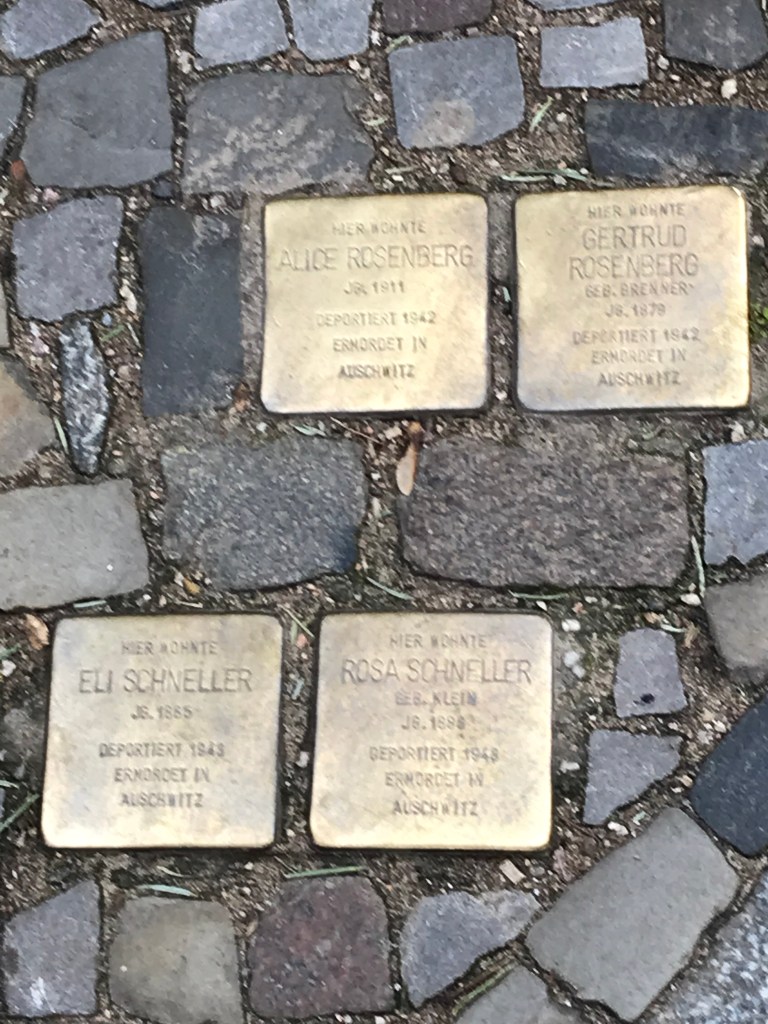
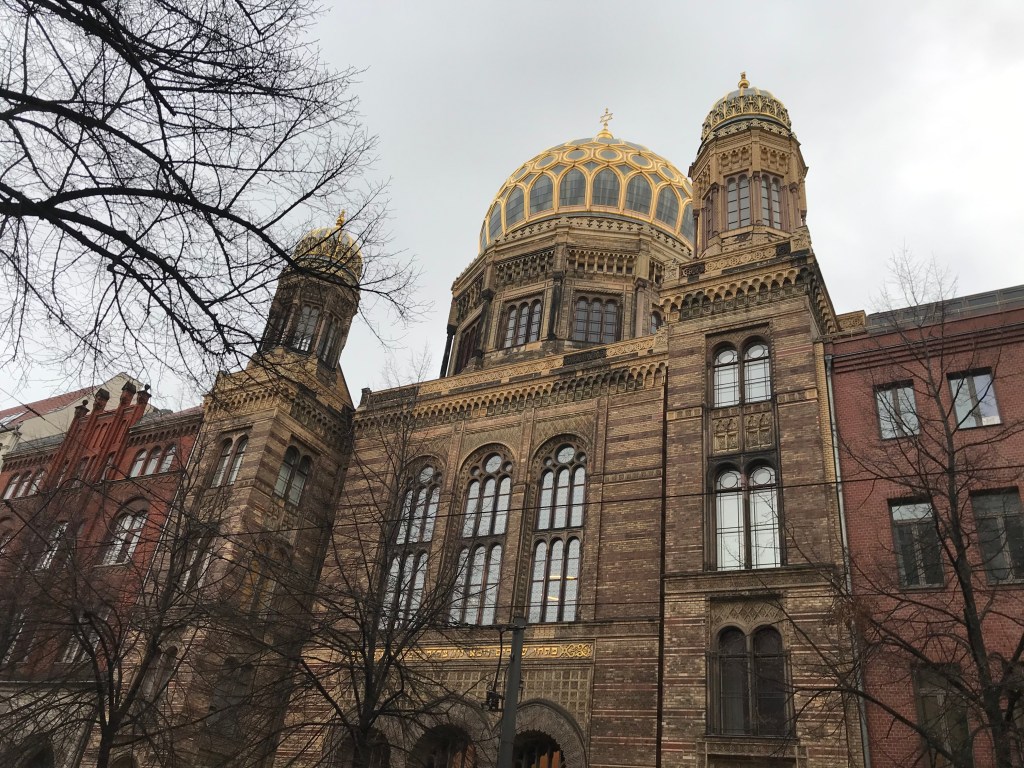
Today the Germans do many things to remember the Jews. There are many memorials around the city of Berlin, to remember and to be remorseful of the tragic event. So many Jews were killed during the time. They remember them by having museums to teach others about their history, such as the New synagogue and the Jewish museum. They also have stumbling stones, which are little memorials on the cobblestone to remember those who died and where they lived.
Jew Street,BerlinStumbling Stones, BerlinJewish Synagogue, Berlin
 Ayanna's Blog